Home › Road, Street, and Municipal Paving
Keep traffic moving smoothly with professional road paving in Boise, ID. We construct and resurface city streets, subdivision roads, and municipal routes with quality asphalt. Our team handles grading, base work, paving, and compaction to deliver safe, durable roadways that meet engineering standards and withstand heavy use and changing weather.
Precision Asphalt Boise provides professional road paving throughout Boise, ID, ID and the surrounding area. Our licensed, insured crew delivers safe, clean, on-time work with a free estimate before anything begins. Call (208) 783-3122 or request your free quote.
Road, Street, and Municipal Paving in Boise, Built for Local Conditions
Precision Asphalt Boise focuses on road, street, and municipal paving that holds up to real Boise traffic, freeze-thaw cycles, and snow removal. We work with city agencies, highway districts, HOAs, and private developers to design and build asphalt that fits each specific route, not a one-size-fits-all template.
In the Treasure Valley, paving decisions need to consider wide temperature swings, irrigation runoff, and heavy equipment from agriculture and construction. Our team evaluates soil type, traffic loading, drainage paths, and existing base conditions before we propose a section design. This helps your project last longer, reduces long-term patching, and keeps your maintenance budget predictable.
We understand local roads are more than just driving surfaces. Neighborhood streets need slower, smoother transitions to driveways and ADA ramps. Collector roads need to manage bus traffic and turning trucks. Municipal parking areas need striping layouts that work with Boise snow storage practices. Our approach is to match the asphalt structure and mix to how your roadway actually functions day to day.
Site Evaluation, Design, and Coordination with Local Agencies
Before any paving starts, Precision Asphalt Boise carries out a detailed site evaluation. We check subgrade stability, existing base depth, drainage patterns, and how water currently leaves the site. In areas with irrigation or high groundwater, we note locations where soft spots and pumping are likely to occur and plan remediation before paving.
For city streets and public projects, we are familiar with Ada County Highway District (ACHD) standards and Boise City requirements. We can work with your engineer or review plan sets to ensure pavement section thickness, compaction specs, and ADA requirements line up with local codes. When needed, we can coordinate with testing labs for density testing and asphalt sampling so your project passes inspection the first time.
For HOAs and private roadways in Boise, we help boards and property managers choose appropriate pavement sections. Light residential streets can often use a different design than a busy commercial access road. We explain tradeoffs between upfront cost and life expectancy so you are not over-building for very light traffic or under-building for routes that see garbage trucks and delivery vehicles every day.
How Road Paving Actually Happens, Step by Step
Once the design is verified, we schedule work to minimize disruptions. For municipal streets and busy access roads, Precision Asphalt Boise often breaks the job into phases so residents and businesses always have a way in and out.
1. Existing surface preparation: We mill or pulverize existing asphalt as needed, remove failed sections, and haul out unsuitable material. Milling allows us to keep curb and gutter heights consistent and maintain proper drainage. In some cases we can recycle milled material into the base layer to save costs.
2. Subgrade shaping and base work: We grade the subgrade to the specified slope, then place and compact road base aggregate in lifts. In Boise’s clay-heavy areas, we pay close attention to moisture conditioning so the base reaches required density and does not pump under traffic later.
3. Fine grading and proof rolling: Before paving, we use a proof roller to identify any soft areas. These spots are excavated and rebuilt so they do not turn into potholes within the first winter.
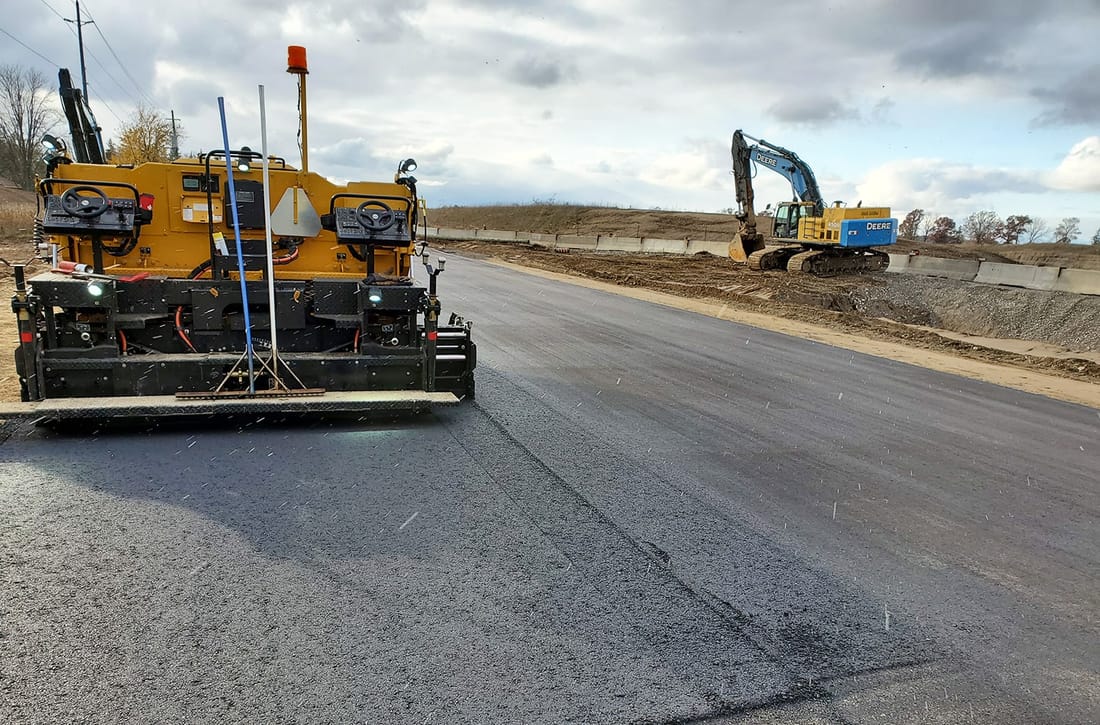
4. Asphalt paving: We place asphalt in one or more lifts depending on the design. For city streets and heavily loaded routes, we often use a structural base course followed by a finer surface course that gives a smoother ride and better sealing. Our crews run modern pavers and steel drum rollers to achieve uniform thickness and compaction.
5. Joints, edges, and tie-ins: We pay attention to longitudinal joints, utility patches, and tie-ins at existing pavement. These are common failure points, so we match elevations carefully, heat-cut edges when appropriate, and ensure proper overlap and compaction.
6. Striping and traffic control devices: Once curing time is adequate, we return to install lane striping, crosswalks, stop bars, and specialty markings. For municipal projects, we can follow city standard details for signage and markings.
Material Options and Mix Designs for Boise Roads
Not all asphalt mixes are the same. Precision Asphalt Boise works with local suppliers to select mixes that reflect the expected traffic and the way Boise roads age in our climate.
For residential streets, we often recommend a dense-graded surface mix that balances smoothness with durability. On busier collectors or commercial access roads, we may use a stiffer binder and larger aggregate size that can better handle truck traffic and braking forces at intersections.
We also consider rutting and cracking resistance. Routes that see frequent heavy trucks, like industrial park roads, can benefit from mix designs that resist deformation in hot summer months. On the other hand, cul-de-sacs and low speed lanes may need better resistance to block cracking from winter temperature swings.
If your project has sustainability goals, we can incorporate reclaimed asphalt pavement (RAP) within local spec limits. We explain where RAP is appropriate and where a higher percentage of virgin material is worth the added lifespan, particularly on critical routes such as emergency access roads and school approaches.
Surface texture and noise can also be adjusted through mix choice and rolling patterns. For example, near residential areas or schools, we aim for a smoother finish to minimize tire noise and vibration.
What Drives Road Paving Costs in Boise
Customers often ask why similar length streets can have very different costs. The largest cost drivers for road paving in Boise are base repairs, thickness, access, and traffic control.
If the existing base is weak or saturated, we may need to remove and replace additional depth of material. This adds trucking and aggregate costs, but it is often where the most value comes from, because a strong base is what keeps roads from failing prematurely.
Pavement thickness is another key factor. A residential lane might require only a couple of asphalt lifts, while a heavily loaded municipal route near a warehouse area could need much thicker structure. Each added inch of asphalt increases material and compaction time.
Access and traffic control are especially important in Boise’s busy areas. Projects near major intersections, schools, or downtown corridors may require more flaggers, detours, or night work to keep traffic moving and comply with ACHD traffic control standards. Planning staging areas for equipment and material within tight neighborhoods can also affect efficiency and cost.
We provide detailed, line-item estimates so city staff, engineers, and HOA boards can see how quantities and phasing affect the budget. If needed, we can suggest options like phased improvements, alternate thicknesses, or focusing first on the worst segments to keep the project within available funding.
Common Road Problems in Boise and How We Prevent Them
Boise roads experience a specific set of issues that relate to our weather and soil. Precision Asphalt Boise tailors construction methods to reduce these problems from the start.
Freeze-thaw cracking: Water that seeps into small surface cracks expands in winter and creates larger fractures. To reduce this, we pay attention to proper compaction, tight joints, and surface drainage so water leaves the roadway quickly. We can also plan a sealcoat or crack sealing program several years after construction to extend the life of the pavement.
Rutting at intersections and bus stops: Frequent stopping and starting concentrates loads in specific spots. We use appropriate mix designs and, in some cases, thicker or stiffer asphalt in these high stress locations so ruts do not form in the first few summers.
Edge failures on narrow roads: In rural or semi-rural parts of Ada County, narrow roadways and soft shoulders can cause edge cracking and breakup. We recommend sufficient shoulder support or full width paving beyond the traveled lane where budget allows. On existing roads, we may strengthen edges with widened base and added asphalt when they are reconstructed.
Poor drainage and ponding: Standing water shortens pavement life. During design and grading, we verify that road crowns, gutter flow lines, and inlets are aligned so water moves off the pavement. In low-lying areas, we may suggest additional drainage structures or subdrain systems below the pavement if repeated saturation is an issue.
What Boise Clients Should Know Before Scheduling Road Paving
If you are planning a road, street, or municipal paving project in Boise, there are a few practical steps that help the work run smoothly.
First, confirm whether your project falls under ACHD, Boise City, or private ownership. This determines who must approve plans, who issues right-of-way or lane closure permits, and what standards we must follow. Precision Asphalt Boise can help clarify which agency has jurisdiction and what documents they typically need.
Second, gather any existing plans, geotechnical reports, or previous pavement assessments. Even older documents are useful for understanding base depths, soil conditions, and earlier repairs. If no information exists, we may recommend a few test pits or cores so we can design a realistic pavement structure.
Third, think about staging and communication. For HOAs and private streets, plan how residents will access homes, where they can park during paving, and how emergency vehicles will get through. We can provide sample notices and schedules for you to distribute so everyone knows what to expect.
Finally, discuss long-term maintenance strategies upfront. We can help you create a basic pavement management plan that covers crack sealing, patching, and eventual overlays. This helps cities, districts, and HOAs budget realistically and avoid surprise reconstruction costs. When you are ready to talk through your specific road paving needs, Precision Asphalt Boise is prepared to review options that match both your traffic demands and your budget.