Home › Commercial Gravel-to-Asphalt Conversions
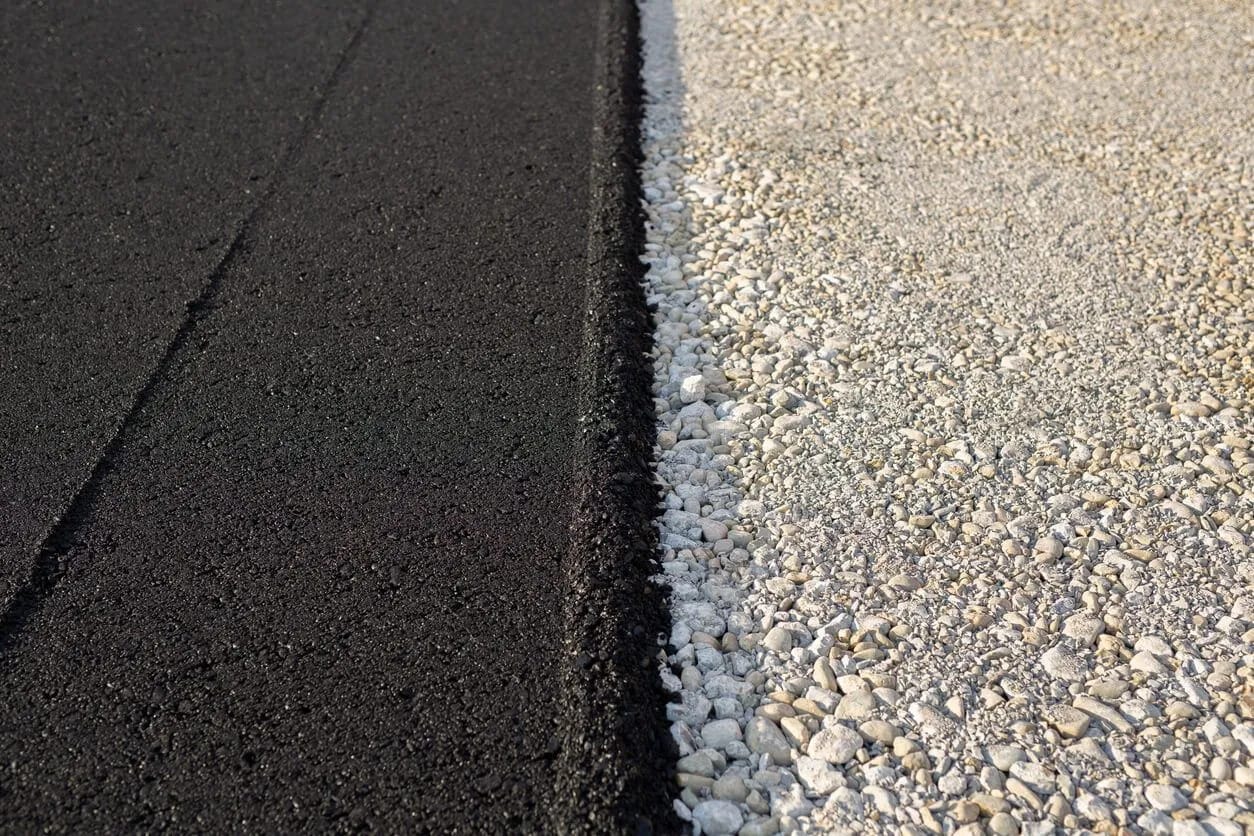
Turn dusty, muddy areas into clean parking with commercial gravel to asphalt conversions in Boise, ID. We stabilize existing gravel, correct drainage, and install new asphalt for lots and drives. Businesses benefit from cleaner interiors, easier snow removal, and a more professional first impression for customers and employees.
Precision Asphalt Boise provides professional commercial gravel to asphalt throughout Boise, ID, ID and the surrounding area. Our licensed, insured crew delivers safe, clean, on-time work with a free estimate before anything begins. Call (208) 783-3122 or request your free quote.
Commercial Gravel-to-Asphalt Conversions for Boise Properties
Precision Asphalt Boise specializes in commercial gravel to asphalt conversions for businesses throughout the Treasure Valley. If your lot is still gravel, you are paying for frequent grading, dust control, mud cleanup, and lost parking space. A properly designed asphalt surface turns that maintenance headache into a clean, clearly marked asset that reflects well on your business.
In Boise we work on everything from older industrial yards near Garden City and the Bench to newer office and retail sites along Eagle Road and in Meridian. Each site starts with a detailed evaluation of your existing gravel section, drainage patterns, and traffic loads. We look at how trucks and cars actually move and park on your property, where water pools after a storm, and where the gravel is being displaced.
From there we design an asphalt section that matches how your site is really used, not a one-size-fits-all approach. For light duty retail parking we may use a different asphalt mix and base thickness than we would for heavy delivery trucks or forklift traffic. The result is a surface that lasts longer and reduces your long-term costs compared with keeping gravel.
Our Step-by-Step Gravel-to-Asphalt Conversion Process
A successful conversion is about more than just paving over gravel. Precision Asphalt Boise follows a structured process to prevent future failures like rutting and potholes.
1. Existing surface evaluation and proof-rolling: We start by running heavy equipment over your gravel lot to identify soft or pumping areas. These spots are marked for undercut or stabilization.
2. Excavation and subgrade corrections: In areas with poor support, we remove unsuitable material like saturated clay or organic soils and replace it with compactable aggregate. In older Boise industrial areas we often encounter buried debris or old fill that must be removed so the new structure has uniform support.
3. Grading for drainage: Using laser-guided equipment, we reshape the lot to create consistent slopes toward existing or new drainage structures. In our climate, standing water in winter becomes ice, so precise grading is critical.
4. Base course installation: We import and place specified crushed aggregate, usually 3/4 inch minus or 1 inch minus road mix, in lifts. Each lift is compacted to targeted density with vibratory rollers. The final base thickness depends on traffic loads and soil conditions.
5. Proof of compaction and fine grading: Before paving, we test and visually verify that the base is tight and free of loose rock. We then fine grade to achieve smooth transitions at sidewalks, approaches, and building entries.
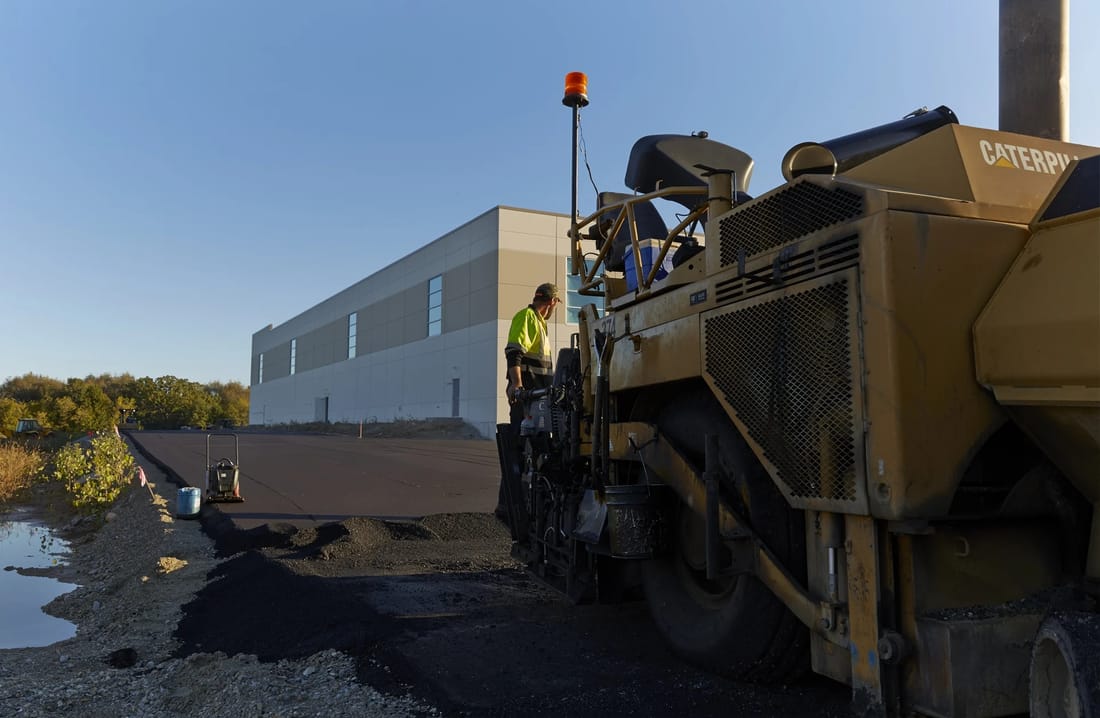
6. Asphalt paving: We install hot mix asphalt with a self-propelled paver, typically in one or two lifts depending on design. Joints are carefully managed and compacted with steel and pneumatic rollers to achieve specified density.
7. Finishing work: After paving, we complete striping, signage, wheel stops, and any concrete work needed at dumpster pads or approaches. We can phase this around your business hours so customer access is maintained.
Local Boise Conditions That Affect Your Project
Commercial gravel to asphalt conversions in Boise are shaped by our specific climate, soil types, and development patterns. Precision Asphalt Boise designs each project with these local factors in mind.
Our freeze-thaw cycles, especially in open lots along the I-84 corridor, put stress on pavements that are not properly drained. Gravel lots often trap water in low spots, which then migrates into the subgrade. When we convert, we correct these shapes and install enough base depth so that water drains away from the asphalt structure, not into it.
Along the Boise River and in parts of Garden City we see higher groundwater and softer subgrades. These sites may require thicker aggregate base or the use of geotextile fabric to separate weak native soils from structural base rock. In areas with expansive clays, like some sections of south Boise and Kuna, we may recommend cement or chemical stabilization in isolated zones.
Older commercial sites built before current stormwater standards can have undersized or poorly located drain inlets. When we prepare your conversion plan, we evaluate existing storm systems and can recommend adding catch basins, trench drains at dock areas, or surface grading changes to keep water away from buildings and high traffic aisles.
Design Options for Your New Asphalt Lot
A gravel to asphalt conversion is a chance to rethink how your lot functions, not just change the surface. Precision Asphalt Boise works with property owners and managers to improve layout, traffic flow, and safety.
We can adjust parking angles and drive aisles to increase stall count or to improve maneuvering for delivery trucks. For Boise office and medical complexes, we often add accessible parking close to entrances, with compliant slopes and transitions. For warehouse and distribution facilities we design thicker asphalt sections or concrete pads in loading and turning areas where heavy loads are concentrated.
Material choices can also be tailored. Standard Boise commercial lots typically use a 1/2 inch or 3/8 inch dense graded surface mix, but for higher speed drive lanes or areas where appearance matters, we can recommend specific mixes that resist raveling and provide a smooth finish. In dumpster or high point-load areas, we may combine asphalt drive lanes with reinforced concrete pads to minimize rutting.
We also plan for future maintenance from the start. Joint locations, edge details along landscaping, and tie-ins at existing concrete are laid out to simplify crack sealing and overlays in later years, which lowers your lifecycle cost compared with a quick, generic overlay approach.
What Drives the Cost of Commercial Gravel-to-Asphalt Conversions
Business owners often want to know why converting gravel to asphalt can vary in price from one property to another. Precision Asphalt Boise provides clear, line-item proposals so you understand exactly what you are paying for.
The largest cost drivers are base preparation and thickness. A site that already has well-compacted gravel with good drainage may need only minor corrections, while a lot with soft spots, heavy truck traffic, or poor grades may require deeper excavation and more aggregate. Our proof-rolling and soil evaluation during estimating help avoid surprises later.
Access and phasing also affect cost. Lots that must stay partially open for customers or deliveries may require night or weekend work, smaller work zones, and additional traffic control. These factors can increase labor and mobilization costs, but they minimize disruption to your operations.
Other cost factors include tie-in work at streets and sidewalks, changes to drainage structures, and striping complexity. An industrial yard with minimal markings and a simple layout will cost less to finish than a multi-tenant retail center that needs detailed stall layouts, fire lanes, ADA markings, and directional arrows.
We walk your site with you before finalizing numbers so you can see where cost-saving adjustments are possible, such as slight layout changes that reduce handwork or a phased approach that spreads investment across budget cycles.
Common Problems With Conversions and How We Prevent Them
The most common issues with poorly executed gravel to asphalt conversions are early cracking, rutting in drive lanes, standing water, and rapid surface wear. Precision Asphalt Boise addresses these problems by focusing on the structure under the asphalt, not just the appearance of the top layer.
Rutting usually comes from insufficient base thickness under areas that carry repeated wheel loads, such as drive-through lanes, fuel islands, and loading zones. We identify these heavy-use areas during design and thicken the base and asphalt there, even if the rest of the lot is lighter duty.
Standing water often occurs when contractors pave directly over rutted or uneven gravel without regrading. We fully reshape the base with controlled slopes and confirm drainage patterns with string lines or laser levels before paving. Where perfect surface drainage is not possible, we recommend additional inlets or surface drains rather than hoping water will disappear.
Premature cracking can result from weak subgrade or lack of separation between poor native soils and structural aggregate. In Boise’s mixed soil conditions, we use geotextiles or stabilization methods where needed and ensure proper compaction. Our crews are trained to stop and correct soft spots they encounter in the field instead of paving over them to save time.
What Boise Businesses Should Know Before Hiring a Paving Contractor
If you are planning a commercial gravel to asphalt conversion, there are a few key points to confirm with any paving contractor you consider.
Ask how they evaluate subgrade strength and existing gravel conditions. A quick visual inspection is not enough for a long-lasting lot. At Precision Asphalt Boise we include proof-rolling and, when appropriate, basic field testing in our evaluation so that required base corrections are known before work begins.
Request a section design, not just a price per square foot. Your proposal should identify base thickness, asphalt thickness, and any heavy-duty zones where the design changes. If a contractor offers a single thickness for everything without asking how your site is used, that is a red flag.
Clarify how phasing and access will be handled. For properties along busy corridors like Franklin, Fairview, or State Street, access management is critical. We develop a traffic control and phasing plan that keeps tenants and customers informed and your operations functioning.
Finally, discuss long-term maintenance. We provide recommendations for sealcoating schedules, crack sealing, and load control to protect your investment. A well-designed and properly maintained asphalt conversion typically provides decades of service and greatly reduces the dust, mud, and grading costs associated with gravel lots in our region.