Home › Asphalt Pathways, Sidewalks, and Trails
Connect your property with smooth asphalt pathway paving in Boise, ID. We build sidewalks, park trails, and multi use paths for schools, HOAs, and businesses. Our crew creates consistent grades, gentle curves, and accessible ramps so pedestrians, bikes, and strollers enjoy a safe, comfortable surface along your routes.
Precision Asphalt Boise provides professional asphalt pathway paving throughout Boise, ID, ID and the surrounding area. Our licensed, insured crew delivers safe, clean, on-time work with a free estimate before anything begins. Call (208) 783-3122 or request your free quote.
Asphalt Pathways, Sidewalks, and Trails in Boise, Built for Real Foot Traffic
If you walk it, jog it, or roll a stroller over it, Precision Asphalt Boise can pave it. We build asphalt pathways, sidewalks, and multi‑use trails for Boise homeowners, HOAs, schools, churches, small businesses, and local parks. Our focus is on paths that feel good underfoot, drain correctly in our freeze‑thaw climate, and hold up to years of use.
In Boise, a lot of older neighborhoods around the North End, the Bench, and West Boise have patchy or cracked walkways that were never built for today’s traffic. Newer subdivisions in Meridian and Eagle often have decent concrete, but they lack connecting asphalt paths to community amenities, playgrounds, or greenbelt access. That is where asphalt pathway paving shines. It allows us to tie your property into existing sidewalks, parking lots, or the Boise River Greenbelt with a smooth and flexible surface.
Whether you want a short asphalt sidewalk from your driveway to the front door, a loop trail around a common area, or ADA‑friendly access from your parking lot to your office entrance, we design each project around how people will actually use it, not just where we can fit pavement.
How Our Asphalt Pathway Paving Process Works in Boise
Every site in the Treasure Valley is a little different, so we start with a short on‑site visit. We walk the route with you, look at existing concrete or asphalt, check slopes and drainage, and note any tree roots or irrigation lines. In older Boise neighborhoods this step is critical, because sprinklers and shallow utilities were often added years after the house was built.
Once we understand the route, we mark the path layout with paint and stakes, then excavate the footprint. For most residential and light commercial pathways we dig 4 to 8 inches deep, depending on soil conditions and expected traffic. In softer river bottom soils near the Greenbelt or along canals, we often remove a bit more and install a thicker base to keep the path from settling.
Next we install and compact the base layer, usually a 3/4 minus crushed rock from local quarries. This is where long‑term performance is won or lost. We shape the base so the future asphalt has a slight crown or cross‑slope, usually 1 to 2 percent, so Boise rain and snowmelt run off instead of pooling. For paths that tie into city sidewalks or curb ramps, we match elevations carefully to avoid trip edges.
After the base is compacted with a plate compactor or roller, we pave with hot mix asphalt delivered from local plants in Boise or Nampa. For most walkways we use a 2 to 3 inch compacted thickness. Narrow residential paths may be placed with a small paver or raked and screeded by hand, then compacted with a roller. On longer greenbelt‑style trails we use a larger paver for a very consistent finish.
We finish by rolling the surface while the asphalt is still workable, tightening the top and bringing out a smooth, dense texture that is comfortable for walking, biking, and strollers. Edges can be left flush with soil for a natural look or contained with metal or concrete edging if you want a sharper border.
Design Options: Widths, Layouts, and Surfaces That Fit Your Property
Asphalt pathway paving is more flexible than many people realize. Precision Asphalt Boise can adjust the width, shape, and surface texture to fit your space and your budget.
Typical residential walkways run 3 to 4 feet wide. This is enough for one person or a stroller, and it works well along side yards, from back patios to garages, or between outbuildings on acreage properties in Kuna or Star. Community and commercial paths are usually 6 to 10 feet wide to allow two‑way pedestrian and bike traffic. Around schools, parks, and churches we often recommend 8 feet as a good balance between comfort and cost.
Layout matters just as much as width. We can create gentle curves that work around existing landscaping and mature trees, or more direct straight runs that connect parking lots to entrances. In older Boise lots where space is tight, we often design low‑profile asphalt sidewalks that hug fences or property lines so you do not lose valuable yard or parking area.
Surface options are more limited with asphalt than with concrete, but there are still choices. Standard hot mix asphalt gives a smooth, dark surface and is the most cost‑effective option. For paths that transition directly from parking lots, we can match the same mix and finish so everything looks intentional. Where extra grip is needed, such as on gentle slopes or shaded areas that stay damp, we can adjust compaction and aggregate exposure slightly to increase texture without making the path rough.
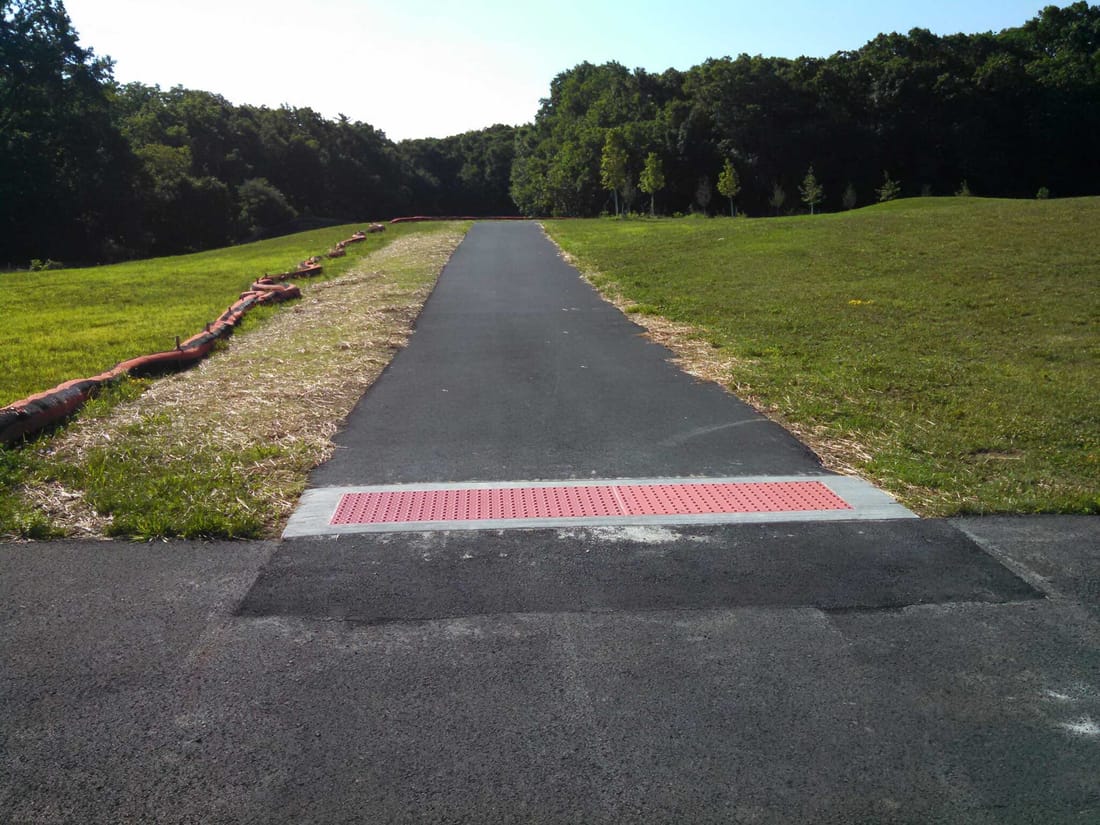
If you need ADA‑compliant routes to building entrances, we design slopes, landings, and transitions to current code, including appropriate cross‑slopes and smooth tie‑ins at door thresholds and curb ramps. We coordinate with any existing concrete work so wheelchairs and walkers move easily from one surface to another.
What Drives Cost and How We Help You Plan the Budget
Pathway and sidewalk projects vary a lot in price, so it helps to understand what actually drives the cost. At Precision Asphalt Boise we walk you through this before we ever bring equipment on site, so you know where your money is going.
The biggest factors are length, width, and thickness. A short 40 foot residential walkway along the side of a house will cost far less than a 400 foot neighborhood trail. Wider paths require more asphalt and base rock, so a 4 foot garden path and an 8 foot multi‑use trail can have very different price points even at the same length.
Site prep is the next major driver. If we are working on relatively flat, open ground with good access for equipment, costs stay down. In tight Boise backyards with limited side access, we might need to use smaller machinery or do more hand work, which adds labor time. Removing old, cracked concrete or settled pavers also adds to the total, especially if there is rebar or thick slabs to haul away.
Soil conditions matter too. In many areas of the Treasure Valley, especially closer to the river, native soils are softer and can pump under load. In those areas we may recommend a thicker base, soil stabilization fabric, or both. This adds some cost up front but prevents the kind of dips and waves that show up a year or two after paving.
Finally, tie‑ins and details affect price. Transitions to existing concrete, drainage fixes, small retaining edges, or working around tree roots all take extra planning and labor. For HOAs and commercial clients, we often phase projects so that the most critical or high‑traffic paths are done first, then remaining legs are added later as budgets allow.
We provide clear, line‑item estimates that list excavation, base installation, asphalt thickness, and any special work like demolition or drainage improvements. That way you can see which options are essential and which are upgrades, and you can adjust scope without guessing.
Common Problems We Solve and How to Keep Your Pathways Looking Good
Most of the pathway issues we see in Boise are preventable with proper design and basic maintenance. When Precision Asphalt Boise is called to fix someone else’s failed path, the same problems show up again and again: poor drainage, thin or no base, and tree roots.
Standing water is the worst enemy of any paved surface in a freeze‑thaw climate like ours. Water that sits on or under a path in November will freeze, expand, and start to open up cracks. We address this upfront by building correct slopes and, when needed, adding small swales or drains to move water off the path and away from foundations, patios, and basement windows.
Thin or missing base rock is the second big issue, especially on older DIY projects where asphalt was placed directly over topsoil. The path looks fine for a year, then footprints and depressions appear, and eventually the surface breaks. Our standard approach is to rebuild the base to the right depth and compaction, then repave. In some cases, if the asphalt is mostly sound, we can mill the surface and overlay a new layer once the base is corrected.
Trees are part of what makes many Boise neighborhoods attractive, but roots can heave walkways. Instead of just paving over the problem, we look at root patterns and, where possible, adjust the path alignment by a foot or two to avoid major roots. For roots that cannot be avoided, we can sometimes bridge the area with a thicker base and careful grading to reduce future movement, though mature tree roots will always require monitoring.
To keep your new asphalt pathways and sidewalks in good shape, we recommend basic care. Keep edges trimmed so grass and roots do not creep under the asphalt. Sweep off gravel and debris that can grind into the surface. For high‑use community trails and commercial walkways, periodic sealcoating every few years can slow oxidation from Boise’s summer sun and keep the surface looking dark and clean.
If you start to see early hairline cracks or a low spot where water collects, it is easier and cheaper to fix those while they are small. We offer crack filling and patching services for our past pathway customers, which helps extend the life of the pavement and protect your original investment.